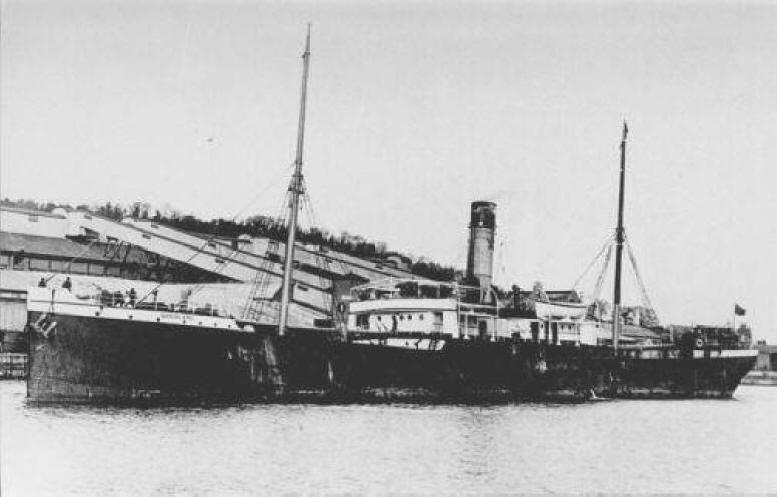
Blue Star Liner ss Brodland
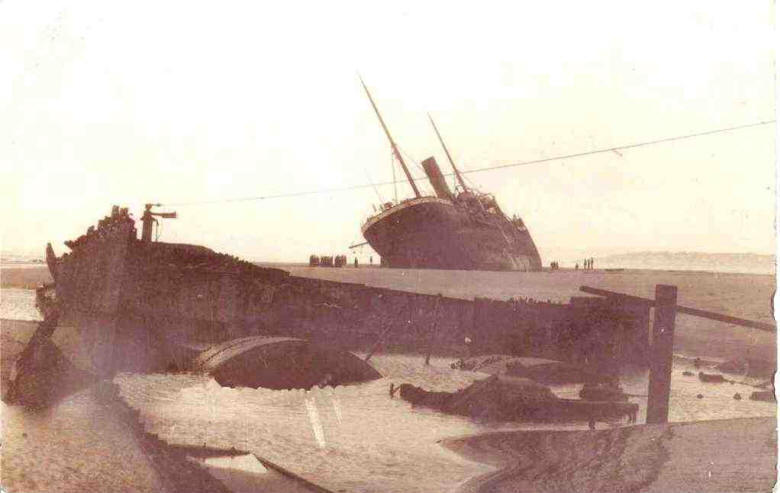
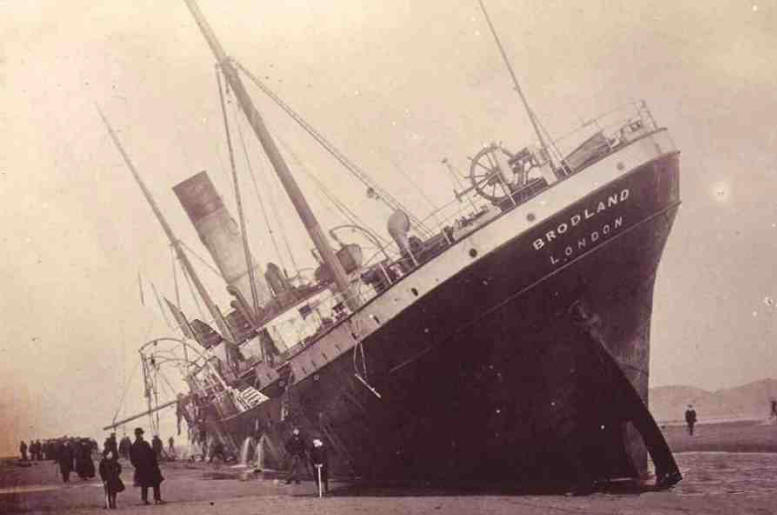
|
Blue
Star Liner s.s. ‘Brodland’ All 42 crewmen were brought safely ashore by the local Life Saving Apparatus team under the command of Capt. Humphrey Jones, as conditions were such that it was impossible to launch the lifeboat. The rescue of the crew took three hours, and hundreds of workmen raced to the beach to give assistance. Included in the crew was one local man, F L James of Tydraw Street, Port Talbot, who was the ship’s carpenter, and the last man to be brought ashore was the master of the vessel, Capt. Vernon A Scott. Registered as a Refrigerated Cargo Liner, the ‘Brodland’ was built by Craig, Taylor & Co. of Stockton on Tees, and completed in July 1891. Launched originally as the ‘Highland Mary’ for the Highland Mary Steamship Co. Ltd., she was later transferred to the Nelson Line (Liverpool) Ltd in 1900. Finally, in 1912, she was bought by the Brodland Steamship Co. Ltd. (managers – Blue Star Line) and renamed the ‘Brodland’. After the grounding she was broken up and sold for scrap, and her anchor can still be seen on display outside the Lifeboat Station on Aberavon Beach. The vessel’s dimensions were:- 310’ length, 41.2’ beam, 17.8’ draft, 2,989 tons GRT and 1,949 tons NRT. |
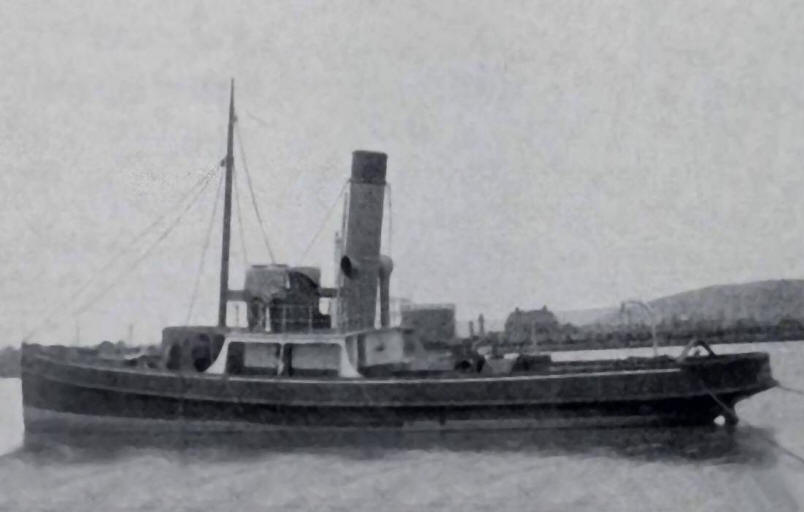
Tugboat Emily Charlotte.
|
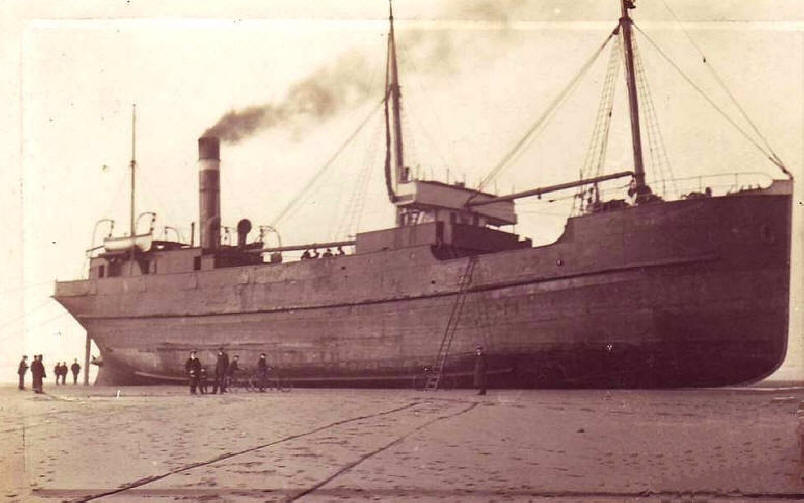
Grounding of the s.s. ‘Christina’
Entering Port Talbot Docks on the evening of the 31st of
January 1903 in a strong westerly gale, the Waterford steamer ‘Christina’
ran aground on Aberavon sands. Fortunately, the ship grounded on an even
keel on firm sand which dried out at low water, so the crew were in no
immediate danger and were able to walk ashore as the tide fell. The next day
the Harbour Master at Port Talbot telegraphed the Mumbles coastguard station
to inform them of the incident, and the lifeboat 'James Stevens No. 12' was
launched around mid-afternoon to stand by as the vessel was refloated on the
evening tide. |
.jpg)
|
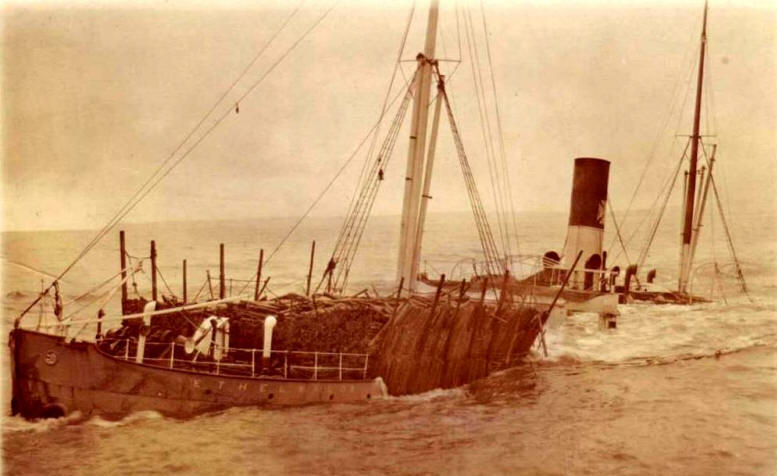
s.s. ‘Ethelwalda’ Whilst entering Port Talbot Docks on the 30th October 1911 with a cargo of pit-props, the s.s. ‘Ethelwalda’ sank after coming into contact with the North Breakwater. The ‘Ethelwalda’ was built by John Readhead & Sons of South Shields in 1890, and was owned by the Whitby-based J H Harrowing Steamship Company. The vessel’s registered tonnage details were as follows:- 3,725 dwt. 2,431 grt. 1,566 nrt. |

|
The s.s.
‘Trafalgar’ |
|
The s.s.
‘Trafalgar’ aground off the North Pier at Aberavon Beach in the early
1900’s, shortly after the ‘Amazon’ disaster. All the crew were rescued and
the vessel was later refloated. |
|
Built in 1904 by William Hamilton & Co. of Glasgow, the
‘Trafalgar’ was owned by the Glasgow Shipowners Company |
|
The
‘Trafalgar’ had a length of 380.6’, a 41.1’ beam, and a GRT of 4,478 tons. |

|
The Amazon |
|
|
On the morning of September 1st 1908 the four-masted barque
‘Amazon’, bound for Iquique in Chile with 2,000 tons of Welsh coal, was
towed from Port Talbot Docks to Mumbles Head where the order was given to
drop anchor due to a rising south-westerly wind. The intensity of the gale
increased overnight and, by the following morning, it was so severe that the
ship’s anchors started to drag and she was soon being buffeted helplessly
across the bay. |
|
|
Finally
driven ashore onto the Margam Sands by the raging storm, the ‘Amazon’ was
quickly broken up by the pounding waves and, despite the heroic efforts of
the Port Talbot L.S.A. rescue team, only eight men out of a crew of 28 made
it ashore alive. The ship’s master, Captain Arthur Garrick of Penarth, was
one of the twenty men who lost their lives in this tragic incident. Fourteen
of the bodies were never recovered. |
|
|
( Note - the ‘Amazon’ was built in 1886 by Barclay Curle & Co. Ltd. of Glasgow
– |
|
 |
|
The above photo of the remains of the Amazon was taken in 2011 by Gareth James. In the background is the Steel Company. We thank him for allowing us to put it on our site |
|
 |
 |
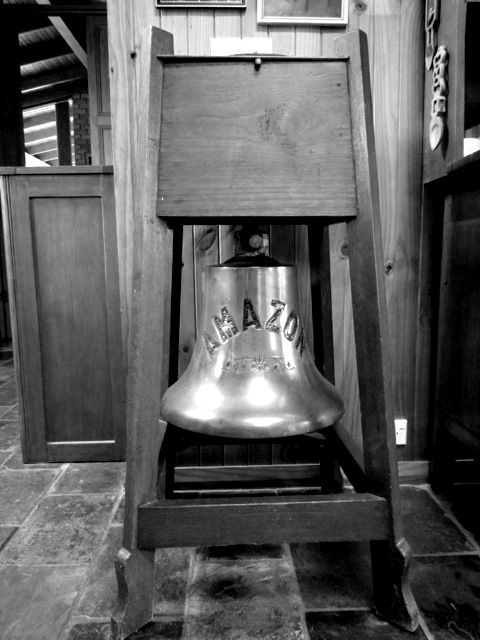
Above are photos of the ship's bell and compass in a purpose made wooden cabinet. |
|
|
|
|
|
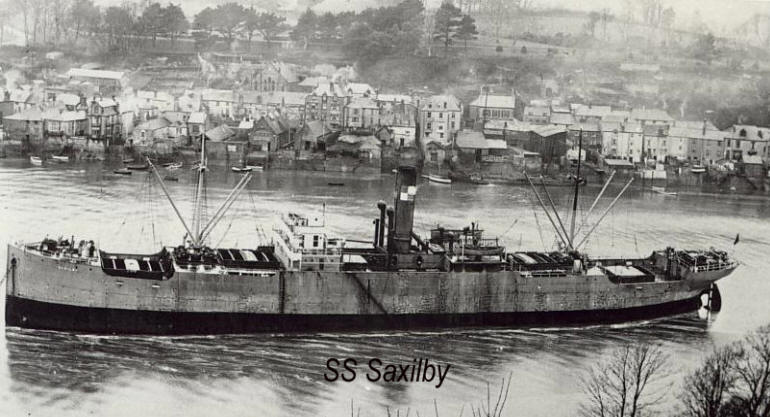
s.s.
‘Saxilby’ |
|
|
On 15th
November 1933 the s.s. ‘Saxilby’, bound for Port Talbot with a
cargo of iron ore from Wabana, Canada, foundered in a North
Atlantic gale some 400 miles west of the coast of Ireland. A
distress signal was picked up in position 51’ 50N 19’ 15W and
several ships went to her assistance, but sadly no trace of the
ship or any of her crew was ever found.
|
|
|
(The above information is taken from Billy
McGee’s book "Ropner's Navy", and is included on our website
|
|
|
Further confirmation of this strange and unusual tale can be
seen in the following extract from the ‘Milwaukee
Journal’ dated April 1947:- |
|
|
“In
November 1933 the West Hartlepool steamer s.s. Saxilby, bound
from Newfoundland to Port Talbot with a cargo of iron ore,
disappeared in a gale 400 miles west of Ireland. Nothing was
heard for two and a half years. Then on April the 26th
1936, because it sounded different from all the other tins he
had kicked that morning, a beach idler opened a cocoa tin
brought to his feet by the waves. It contained a hastily scribed
note:-
|
|
|
ss Saxilby sinking somewhere off the Irish coast.
Love to my sisters, brothers and Dinah. Joe O’Kane |
|
|
Strangely these last words from a doomed sailor were delivered to his home town, Aberavon – almost to the doorstep of the persons to whom they were addressed” |
|
|
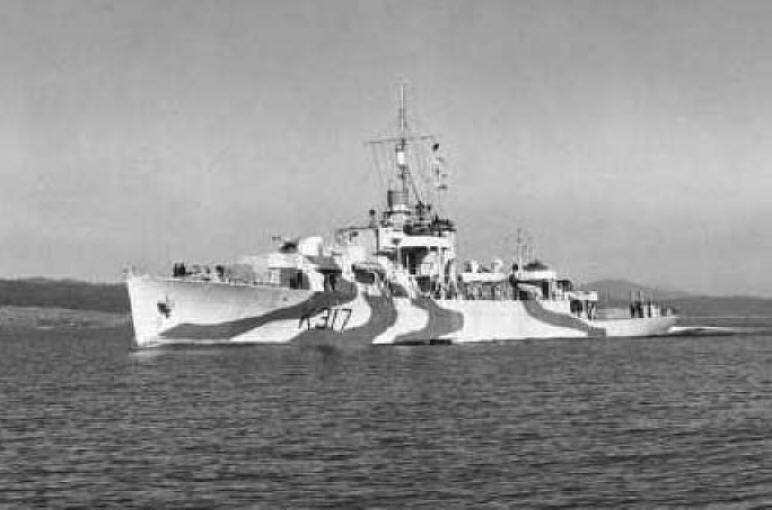
The Canadian frigate ‘Chebogue’ |
|
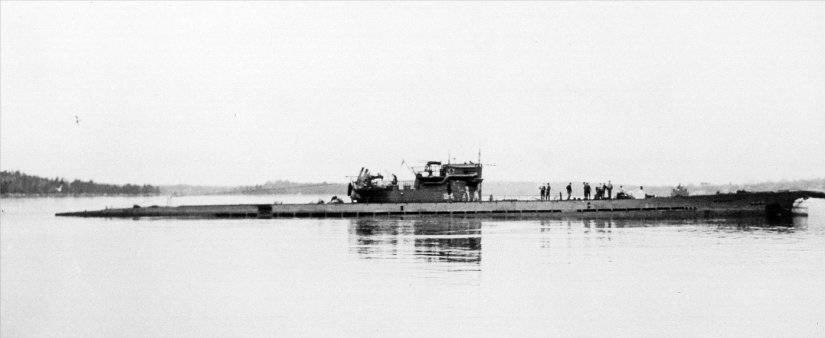
The frigate ‘Chebogue’ had been launched in August 1943 and commissioned in February 1944, but was never repaired after the above incident and was decommissioned in September 1945. The submarine U-1227 escaped its encounter with the ‘Chebogue’, and also survived three further attacks that same year. She was finally damaged by British night-time carpet bombing in April 1945, taken out of service, and scuttled the following month.
|

The damaged frigate
Chebogue in Port Talbot Dock

Able Seaman Joseph Gaal
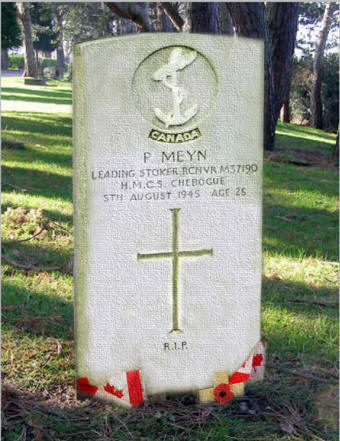
Leading Stoker Paul Meyn
|
Two crewmen off the 'Chebogue', Leading Stoker Paul Meyn and Able Seaman Joseph Gaal, are buried in the War Graves section of Morriston Cemetery. Photographs of their headstones are shown above. |
|
Type IXC/40 U-boat
|